

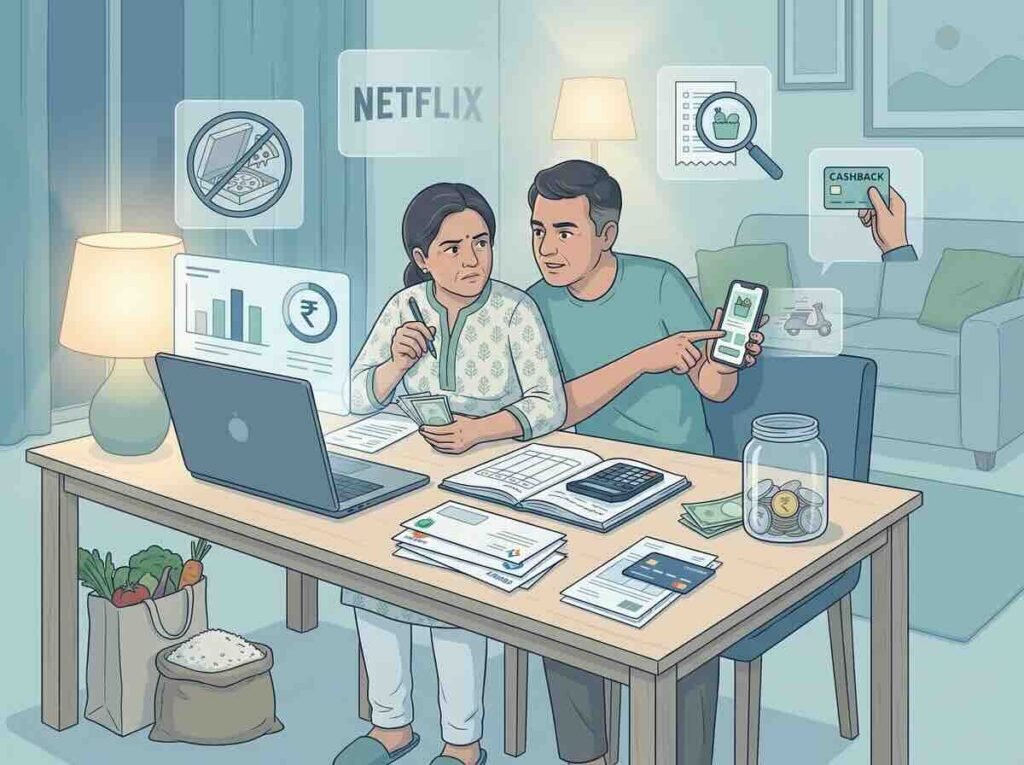
When money is tight, saving feels impossible. After rent, EMIs, groceries, and bills, there seems to be nothing left. But in most cases, there are practical ways to free up ₹2,000 to ₹5,000 per month without dramatically reducing your quality of life — if you know where to look. Here are five approaches that work in the Indian context.
1. Audit your recurring subscriptions
Most people are paying for subscriptions they barely use. A typical household might have:
– Netflix, Prime Video, Hotstar, Sony LIV, Zee5 (₹200–500 each)
– Multiple music apps
– Cloud storage plans
– Gym memberships not being used
– App subscriptions forgotten on the Google Play or App Store
Step: Open your bank statement and credit card statement for the last 3 months. Highlight every recurring charge. Cancel anything you have not actively used in the last 30 days.
Potential saving: ₹500–2,000/month. This is the easiest money you will ever save.
2. Switch to smarter grocery and food habits
Food is typically the most variable — and therefore most controllable — large expense for Indian households.
Practical changes:
– Plan a weekly meal menu and buy groceries accordingly. Reduces impulse buying and food waste.
– Buy staples (rice, dal, oil, spices) in bulk from wholesale stores — typically 15–20% cheaper than supermarkets.
– Limit food delivery orders to weekends. Cooking at home 5 days a week can save ₹3,000–₹6,000/month for a family.
– Use cashback credit cards or UPI cashback offers for grocery spending to earn back 1–3%.
Potential saving: ₹1,500–4,000/month depending on current spending.
3. Refinance your loans
If you have an existing home loan, personal loan, or car loan taken at higher interest rates — especially before 2022 — you may be able to refinance at a lower rate.
For home loans: Check your current interest rate. If it is more than 0.5% higher than current market rates (currently around 8.5–9% for home loans), request your bank to reduce it or consider balance transfer to another lender.
For personal loans: If you have high-interest personal loans (12–18%) and a good credit score, check if you qualify for a lower-rate loan to replace the existing one.
Saving ₹1–2 lakh in interest over the remaining loan tenure is real money.
4. Use credit cards strategically (not for credit)
This sounds counterintuitive, but the right credit card — used correctly — is a powerful savings tool.
The rules:
– Pay the full balance every month. Never carry over a balance. Credit card interest of 36–42% annually will destroy any benefit.
– Use reward or cashback credit cards for regular spends: groceries, utility bills, fuel. Even 1–2% cashback on ₹20,000/month of spending is ₹2,400–4,800/year back in your pocket.
– Use card-specific merchant offers — many cards give 5–10% off at specific partner restaurants, travel portals, or e-commerce platforms.
Potential benefit: ₹3,000–6,000/year in cashback and rewards.
5. Negotiate your fixed expenses
Many fixed expenses are not actually fixed — they are just never questioned.
– Broadband: Call your provider and ask if there is a better plan at the same price. Competition is high — most providers will offer a retention deal.
– Insurance premiums: Health insurance premiums can be compared and switched annually at renewal. A 15-minute comparison on PolicyBazaar can save ₹2,000–5,000/year.
– Mobile plan: Review your actual data usage. Many people pay for a premium plan but use a fraction of the data.
– Rent: If your landlord has not raised rent in 2–3 years and you have been a good tenant, you likely have negotiating leverage when lease renewal comes.
Potential saving: ₹1,000–3,000/month across various bills.
The bottom line
Saving on a tight budget is not about extreme sacrifice. It is about identifying leaks — subscriptions you forgot, food orders out of habit, loans at outdated rates, bills no one ever questioned.
Start with the subscription audit — it takes 20 minutes and almost always reveals free money. Then work through the others one at a time. Small savings compounded monthly add up to significant amounts over the year.